
Previously written, source: https://laolv.org/how-to-drink-tea-healthily
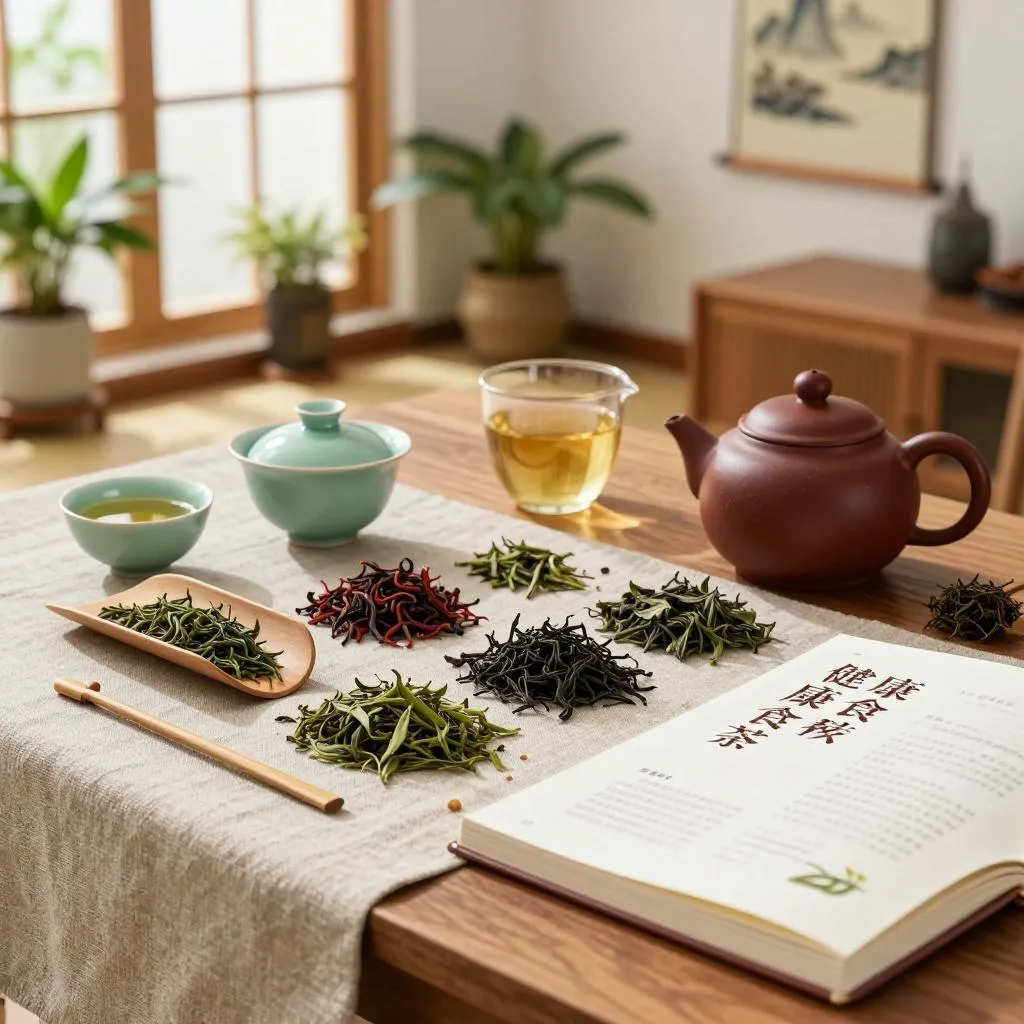
First, memorize the tea-drinking mantra I spent months refining:
Prefer warm over hot, prefer fermented over green;
Prefer aged over new, prefer fully processed over raw;
Prefer early over late, prefer snacks over an empty belly;
Prefer light over strong, prefer moderate over excessive.
Months of work - not because the content is hard, but because I wanted these lines symmetrical and easy to remember; I revised many versions.
If you have a better wording, message me and I will change it.
1. Let me explain the mantra.
1. Warm, not hot.
Easy to understand, yet the easiest to ignore.
Our esophageal lining is truly delicate - only 0.5-1 millimeter thick.
From what I have researched, experimental data give a temperature-injury gradient:
50-60°C: the lining begins reversible damage
65°C: the WHO-designated cancer warning line
70°C: one second of contact can cause irreversible damage
above 75°C: immediate cell death and shedding of the lining's surface cells
The WHO's cancer agency (IARC) reported that hot drinks above 65°C may increase the risk of esophageal cancer; drinks above 65°C are listed as Group 2A carcinogens. The esophagus is fragile; its normal tolerance is 40-50°C.
When drinking tea, do not rush - wait two minutes. Is not much of life the same?
2. Fermented, not green.
Like bananas and persimmons: ripened, they taste better and do not hurt the body.
Post-fermented foods - fermentation here means not only ripe tea but also black tea, oolong, and aged teas.
So many colleagues and hardcore pu-erh fans love the strength and intensity of new raw tea, and the bitterness that turns to sweetness. Drink such tea long-term and many bodies develop problems - tea harming health is not worth it.
"Green" means raw-cold and green-rough. Newly made green tea has green-rough notes; raw pu-erh that is not processed through has serious raw-cold character.
Drink more fermented and post-fermented tea, and your body absorbs far less cold.
3. Aged, not new.
All tea in fact improves with age - and that "better" means not only fragrance but gentler, less stimulating, more comfortable drinking.
Everyone chases new Longjing, but old masters will tell you that freshly made Longjing should not be drunk at once; rest it a month and it tastes better.
Aged pu-erh has a huge audience; many drinkers and peers who had problems with new tea now choose aged as their first pick.
Not only pu-erh: black tea and oolong with some years behind them also gain a special savor - they too become "fragrant" with age.
Some say ripe tea nurtures the stomach and has no damp-cold. That claim is questionable: no tea truly nurtures the stomach; it is only less irritating. Many low-end ripe teas are still highly stimulating and cold; those with more years behind them are much better.
4. Fully processed, not raw.
Drink more fully processed tea, not half-cooked tea. These years I have cooperated with several TCM doctors to solve tea's cold problem. During testing we found that 99% of market pu-erh leans cold; if the spleen and stomach cannot handle it, problems follow. Fully processed tea is warm-natured, and even new tea is then drinkable.
"Fully processed" does not mean ripe tea made thoroughly; it means all teas - raw, black, white, and so on - should be processed through completely.
I have written much about the full processing of pu-erh; see my other "Talking About Tea on Paper" articles for more.
Fujian people drink tea lifelong without many problems because what they mainly drink is roasted oolong - Tieguanyin and oolong are roasted, and roasting is an act that quickly ripens tea and removes coldness. In recent years lightly roasted oolong has become fashionable - beware: if the maker lacks experience and the tea is not fully roasted, it can still bring damp-cold to the body.
5. Early, not late.
Individuals differ in tolerance. For some, evening tea affects sleep and causes insomnia; the closer to bedtime you drink, the greater the effect. Tea contains alkaloids that strengthen the heart, promote urination and excite the nerves; they stimulate the central nervous system and raise brain-cell activity, leaving the body alert - which disturbs sleep and easily causes insomnia.
Long-time tea drinkers may find an evening cup relieves fatigue and improves sleep; such people can drink in the evening, arranged three to four hours before bed. Evening tea should be light and fully fermented with low stimulation - ripe tea, black tea, oolong or aged tea.
For most of us, the best times are morning and noon; in the evening, drink little or none.
6. With snacks, not an empty belly.
Pairing tea with tea snacks is ancient practice.
"Empty-belly tea" means drinking only tea with nothing to eat - many people cannot handle it.
A little snack while drinking adds pleasure and prevents over-drinking tea on an empty stomach, which causes "tea drunk".
This is also why tea snacks have flourished.
A suitable snack complements the liquor without masking the tea's own taste.
Common tea snacks include fruit, pastries, candies and raisins.
7. Light, not strong.
The Caigentan says: rich, fatty, spicy, sweet are not true flavors; the true flavor is only plainness.
Light tea preserves the beneficial components - happy drinking without overloading on irritants.
Antioxidants like tea polyphenols and catechins remain present in light tea; caffeine is lower, so it rarely makes your heart race; light tea irritates the stomach less and suits most people, especially elders whose digestion has declined.
Tea is really more like "functional water".
Many premium ingredients are also plain - deep-sea seafood and sashimi let you taste the ocean's charm and clean sweetness. Turn those into Sichuan-style dishes - never mind whether it tastes good, is it not wasting nature's gifts?
"Plain yet not plain" - the flavor I always emphasize for good tea. The first "plain" means clean and non-irritating; the second "not plain" means the liquor is tight, round, rich in flavor and full of charm.
Do not drink strong tea; light tea is just fine.
8. Moderate, not excessive.
From my observation, sensitive drinkers can have one brew a day (not at night) with little effect on the body.
Most people can drink two brews daily without much effect.
There is no limit on the number of infusions per session; the tail water of good tea can keep steeping - clean-sweet, crisp and calm, a beautiful feeling.
If you especially love tea and the tea is good, a few more brews are fine, but remember:
teacan not replace water; tea is only an effective complement to water.
2. For those who must cup teas.
Senior drinkers and industry professionals have to cup teas and need even more discipline. Since tea is their work, many must taste and quality-control constantly - unavoidably, sometimes dozens of teas a day. There is technique: taking myself as an example, in early broad screening I hold the tea in my mouth, taste it without swallowing, and spit it out - that way the body is rarely harmed.
3. A side remark.
Tea drinking can be healthy, but drink in an orderly way: no strong tea, no excess.
We learned to eat as children; we should also learn to drink tea. Do not worship tea masters - while you admire them, they are eyeing your wallet.
Trust yourself: if a tea makes you uncomfortable, stop drinking it.
No matter how expensive, aged or famous a tea is - if it smells acrid and tastes unpleasant, throw it away.
Tea you have drunk cannot be taken back out.
Drink tea healthily! Click for more Talking About Tea on Paper articles.
Comments (0)